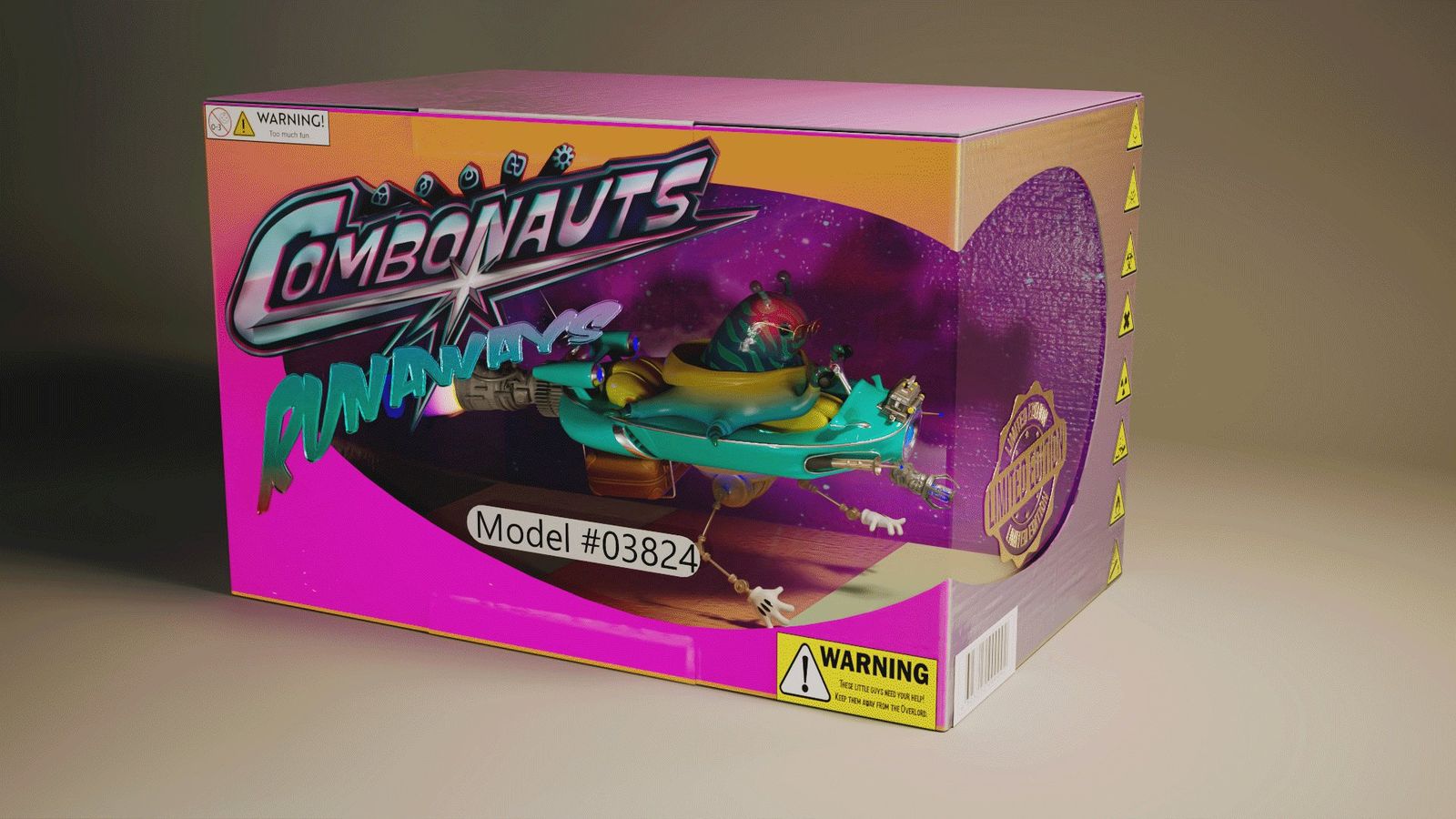
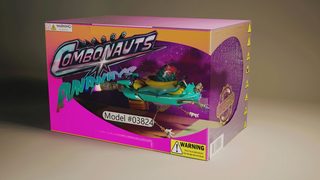
The Combonauts — small aliens on vehicles — had been in development at Beyond before I came on board as Creative Director. The characters had charm but the aesthetic register was too childlike for the market they needed to reach. When the company decided to develop them into an NFT collection, the brief changed entirely.
NFT collectors in 2022 were a specific and demanding audience. They needed edge, collectibility, a sense of cultural depth, and — critically — built-in narrative that would engage their imagination and give them access to a world, not just a set of objects.
The Combonauts as they stood couldn't carry that weight. A new identity was needed — one that could survive a pivot from NFT collection to game prototype without losing coherence.
The NFT market's appeal wasn't purely financial — it was about belonging to a world with its own mythology, aesthetics, and in-jokes. The most successful NFT collections weren't just images; they were cultural objects with a point of view.
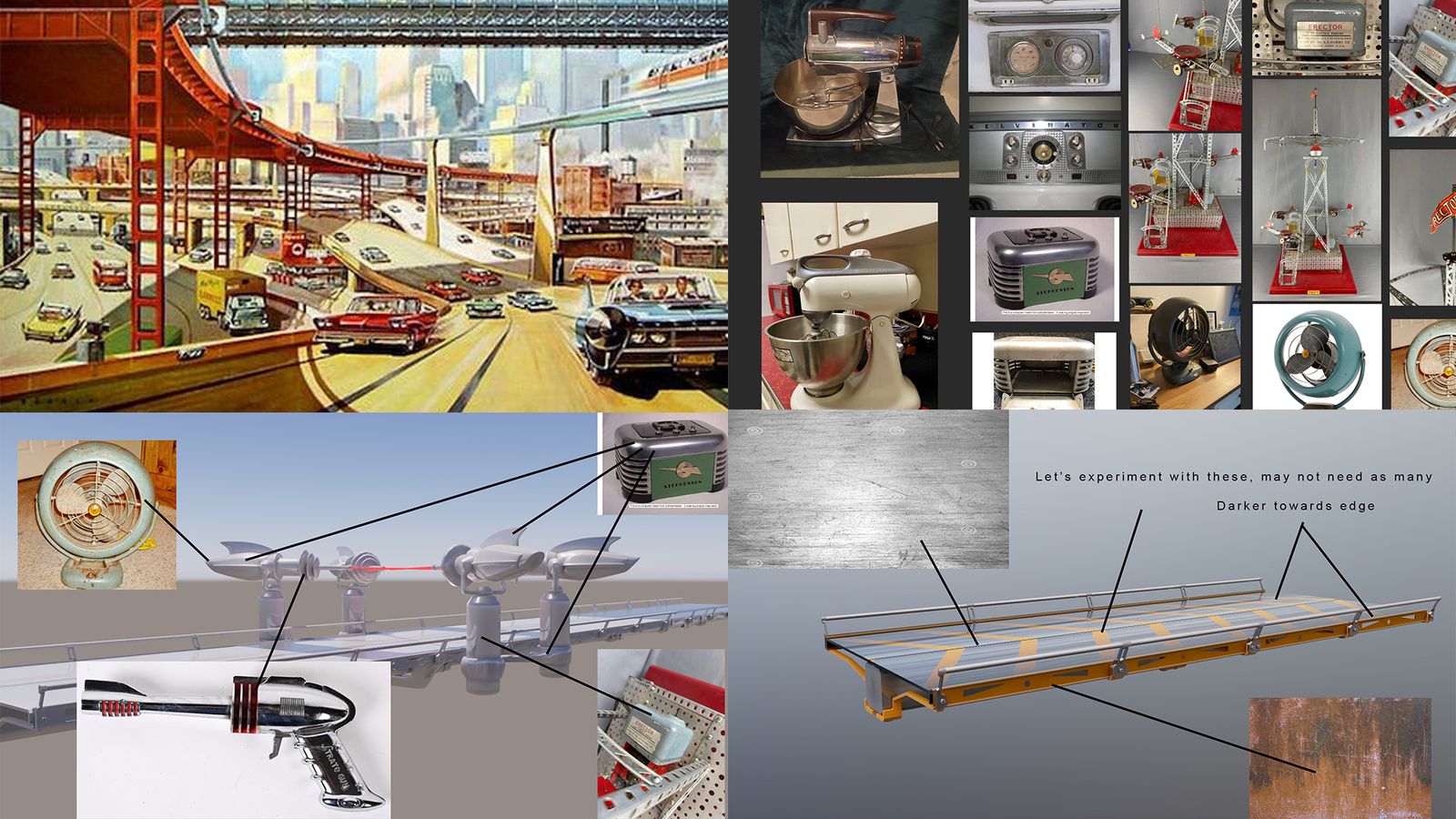
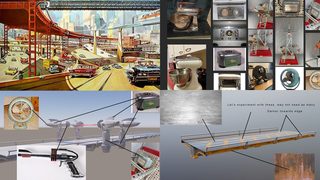
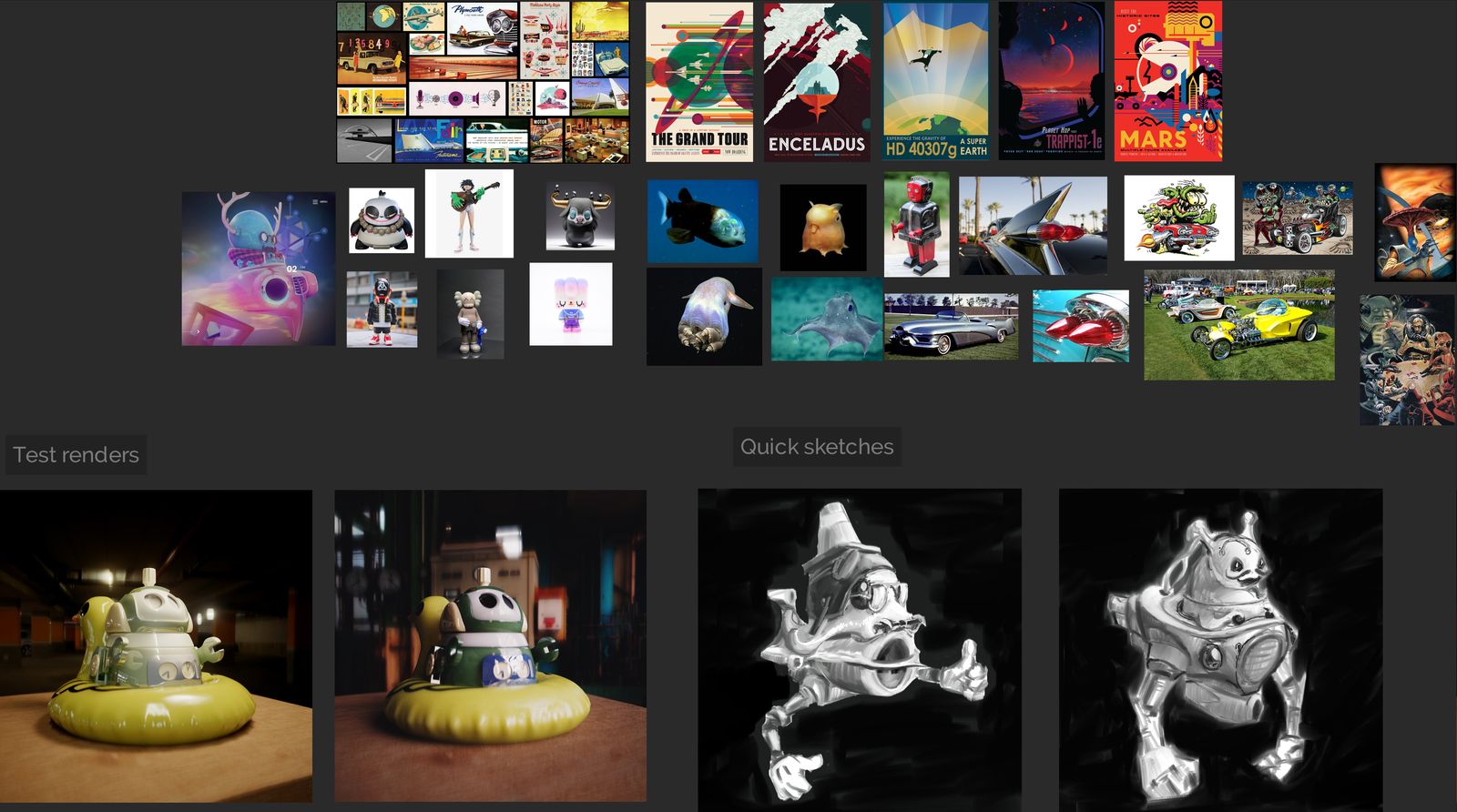
What this project needed was a register that felt simultaneously irreverent and lovingly crafted — something that spoke to adults who had grown up with Garbage Pail Kids, hot rod magazines, pulp sci-fi paperbacks, and 1950s retro-futurism. People who collected things not just because they were valuable but because they were strange and specific and made with genuine obsession.
That wasn't a brief anyone had articulated. But it was the thing the project was searching for.
Cosmic Happy Meal wasn't chosen because it was fashionable. It was chosen because it described an exact cultural and emotional register that a specific audience would recognise and respond to — people who had grown up loving strange, handmade, obsessive things.
Once named, every decision had a reference point. Not "does this look good" but "does this belong in a Cosmic Happy Meal world." The framework made disagreements productive and decisions fast.
The story developed alongside the founders: the Runaways used to work for the Overlord, travelling the galaxy collecting second-hand bric-a-brac he coveted. He was cruel. A few decided to escape. The infinite runner mechanic and the narrative were the same thing — they're running because they have to.
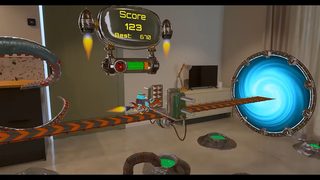
The Cosmic Happy Meal framework held through every pivot. When the NFT market contracted and the project moved toward a Vision Pro prototype, the identity was stable enough to make the transition coherent. The Runaways were already a world — the platform changed, the world didn't.
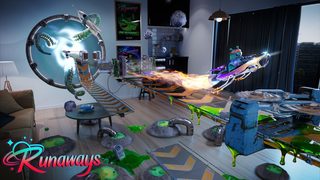
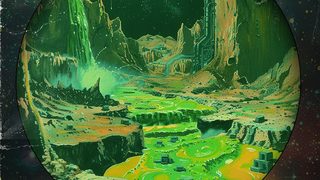
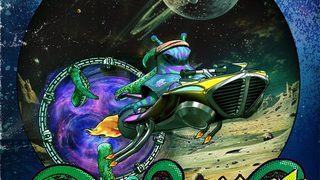
The game's visual language — vehicles, track design, traps, obstacles, enemy characters — all derived directly from the framework. The hot rod energy in the vehicle exhaust trails. The Garbage Pail Kids wrongness in the Overlord's creatures. The pulp sci-fi conviction in the portal design. Nothing was arbitrary.
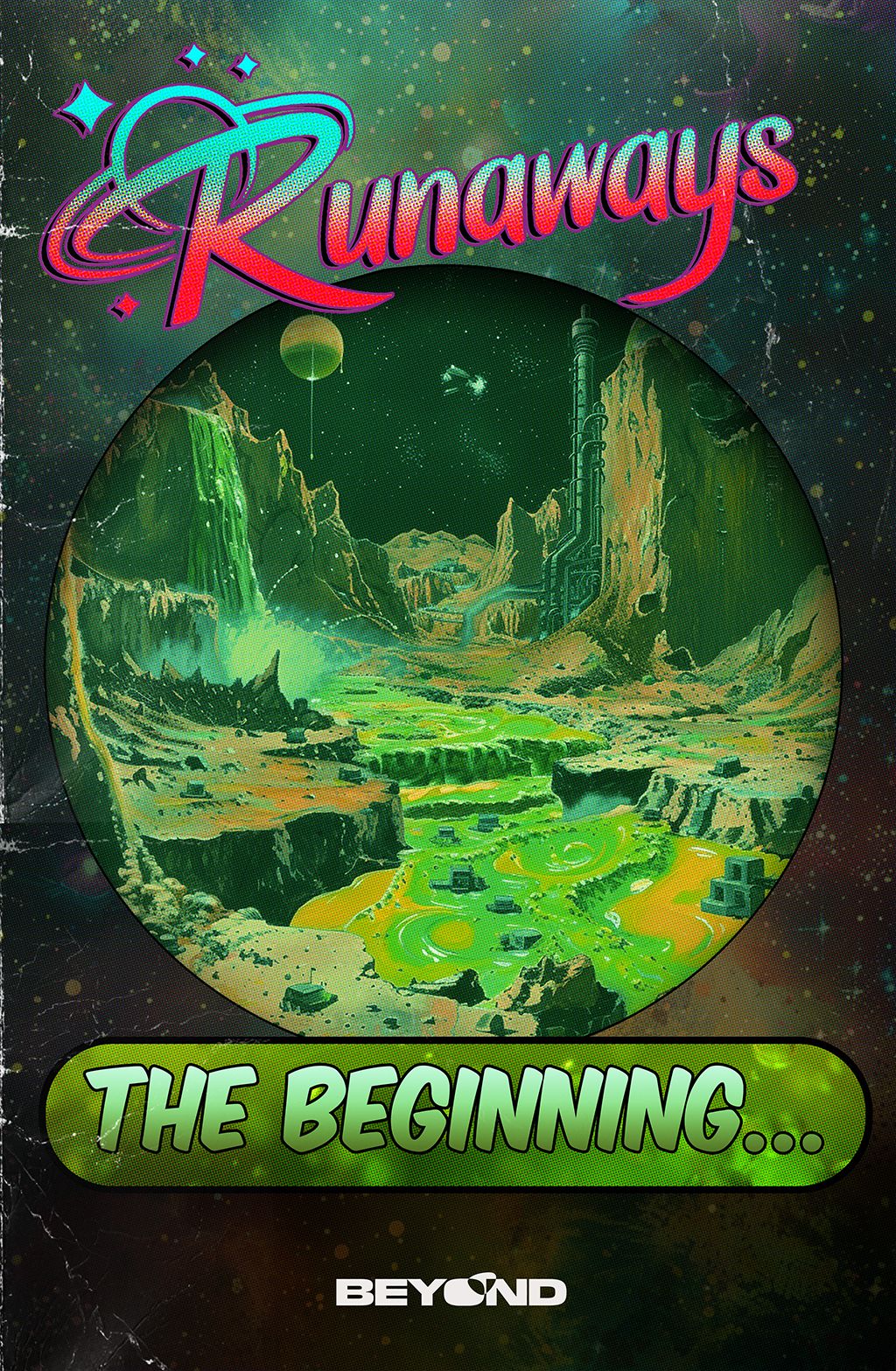
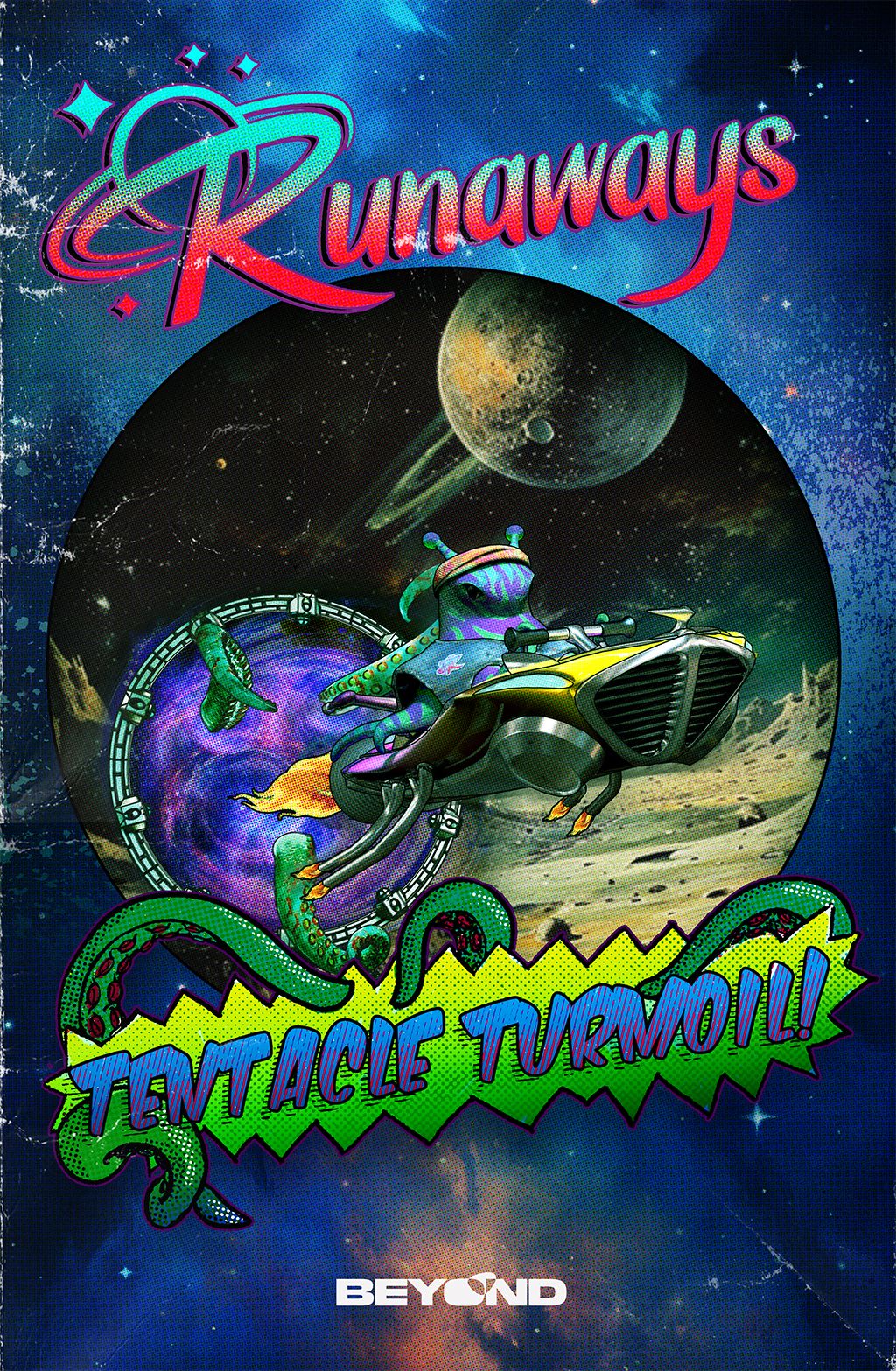
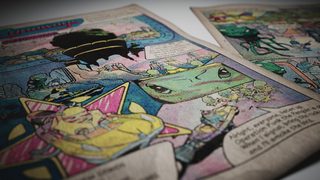
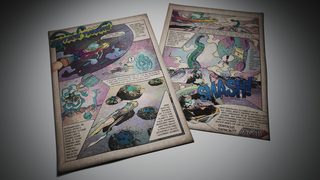
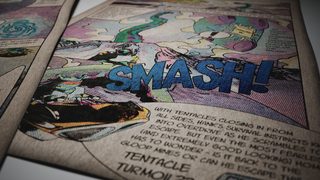
The comic format for narrative delivery was both an aesthetic decision and a practical one — it was native to the Cosmic Happy Meal register, required no expensive cutscenes, and built a scalable system where future level packs could release as their own comic issues. Constraint and aesthetic rightness arrived at the same answer.
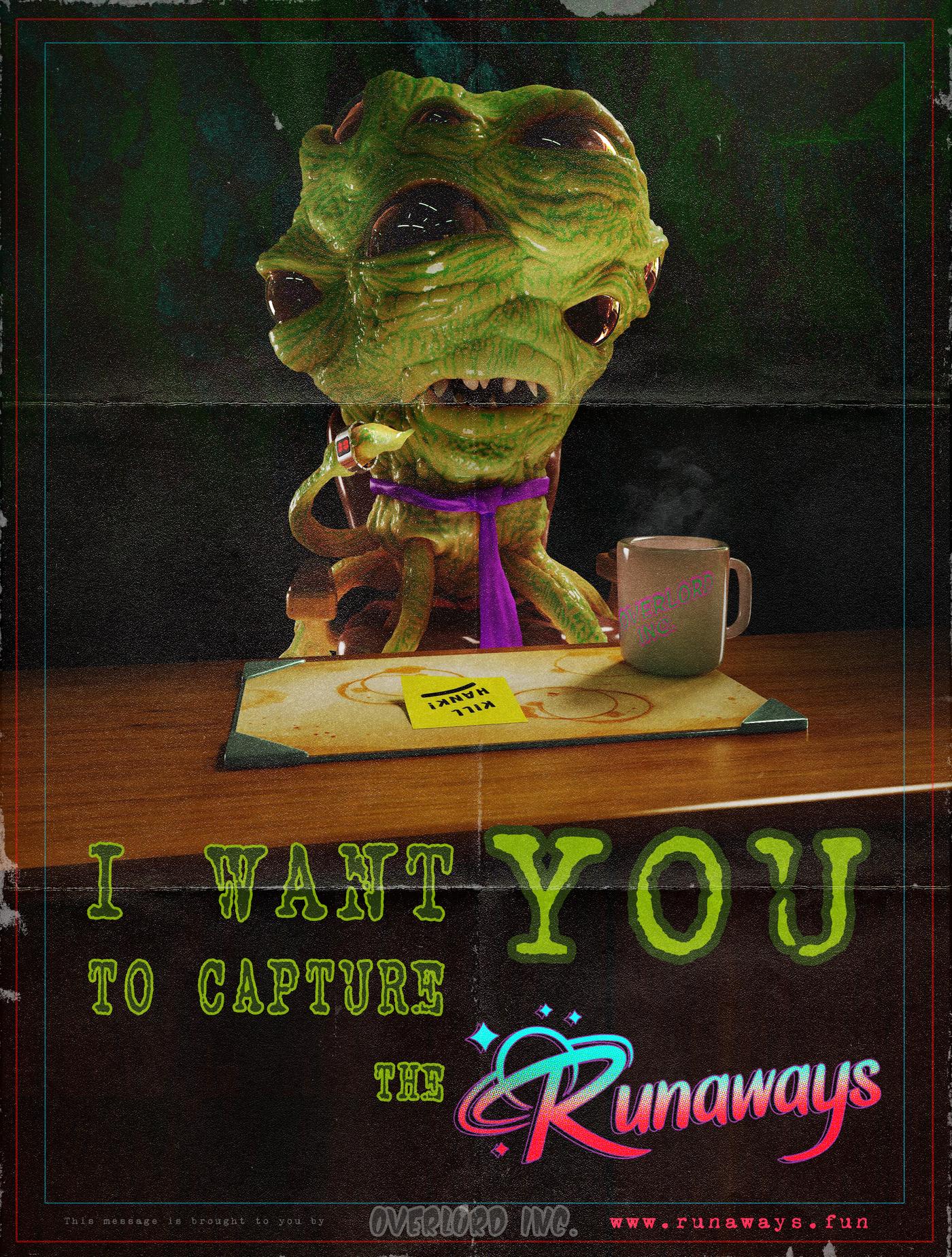
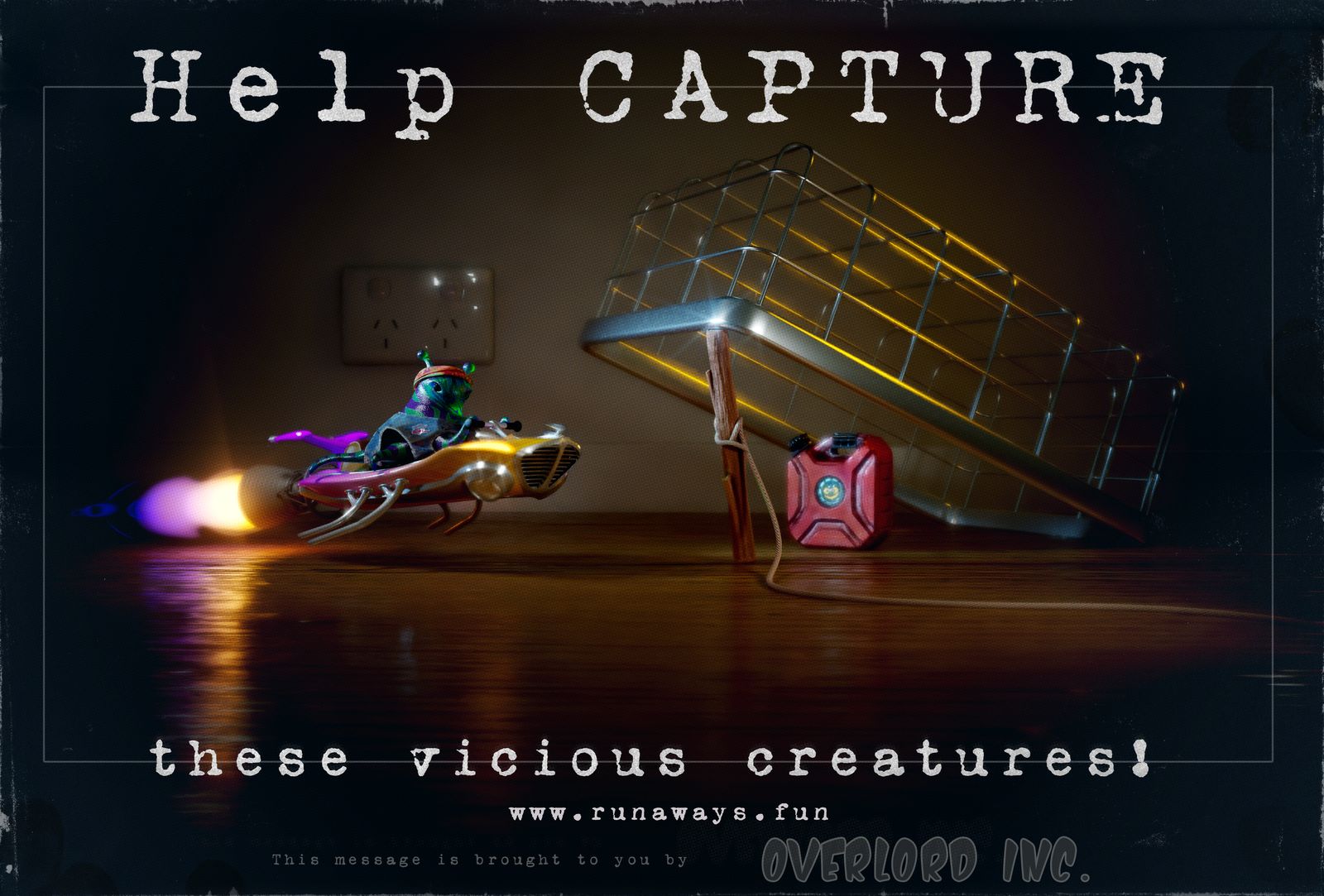
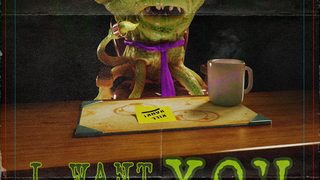
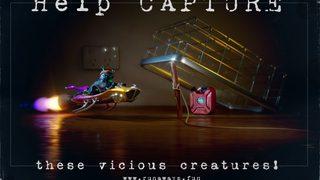
The Cosmic Happy Meal framework extended beyond the game itself into the surrounding fictional universe. The Overlord has a marketing department — Overlord Inc. — and they produce propaganda in exactly the register the framework demands. Pulp sci-fi poster design, typewriter fonts, the gleeful wrongness of a villain who genuinely believes he's in the right.
These pieces weren't created as marketing materials for the game. They were created as artefacts from inside the world — things the Overlord's civilisation would actually produce. That distinction is the difference between a game with good branding and a game with a coherent fictional universe.