Immersive & XR
Interstellar Arc
An immersive VR experience — Felix & Paul Studios / Area 15 Las Vegas
StudioFelix & Paul Studios
VenueArea 15, Las Vegas
MediumDirected-walking VR
FrameworkAmanogawa
01 — The Problem
A functional constraint without an aesthetic solution — yet.

Having previously collaborated with Felix and Paul on The Seven Ravens project, I was very happy to work with them again on this ambitious undertaking — a location-based retrospective on the future of space travel, asking participants to inhabit a world 600 years from now.

Directed walking experiences use a physical track to guide participants through a virtual space — the body's movement through the real world mapped onto an apparently larger virtual environment. The mechanic is technically elegant. The problem is what it produces visually.

The unfolded track geometry was structurally necessary and aesthetically incoherent. The unfolded track was a technical necessity, but it's edges and corners could be made elegent and get architectural justification. The central spindle space — the experiential heart of the piece — needed to inspire something close to awe.

The brief asked for the unfolded track to be more elegant. The project needed participants to feel the weight of something they couldn't name.

A conventional art direction approach — surface treatment, lighting, asset quality — would have resolved the first problem and missed the second entirely.

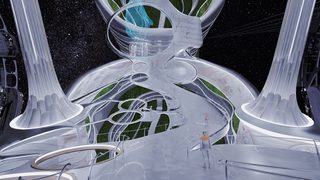
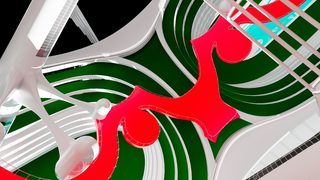
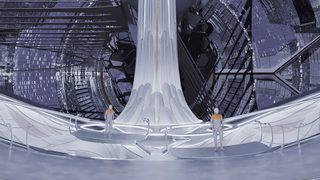
Original unfolded track geometry
The original unfolded track geometry — the engineering constraint that needed to become a world
02 — The Unnamed Thing
What the experience was actually searching for.

Felix and Paul were seeking a visual approach that aligned with their overall vision for the impact this project would have. The brief was about aesthetics. The project was about meaning. Specifically: the meaning of human beings collectively dedicating their lives to the long, slow work of exploring the stars — a project that no individual will live to see completed.

That's not an aesthetic problem. It's a cultural and emotional one. The environment needed to carry the weight of that collective endeavour without stating it — to make a participant feel, through the objects and spaces around them, that they were inside something that mattered at a civilisational scale.

No amount of visual polish resolves that. It requires a framework — a named world with its own internal logic — that every subsequent decision can reference.

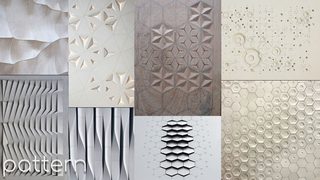
Reference — pattern languages: the search for surface and material logic
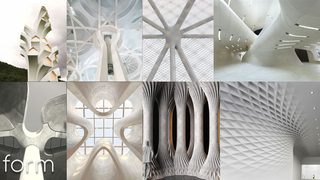
Reference — architectural form: structural elegance as cultural expression
03 — The Framework
Naming the world before building it.
The Named Framework
Amanogawa
An art movement set more than 200 years into humanity's future among the stars. Named after the Japanese word for the Milky Way — the river of heaven.
I
The artistic equivalent of long-term, multigenerational thinking.
An algorithmic basis where elements are arranged like music — you can almost hear it while experiencing this deeply profound art. Each artist contributing to the whole, their individual voice part of a score that spans centuries.
II
Parts and patterns intertwined, progressing with beautiful elegance toward their goal.
Each piece unique, but necessary — a mirror of humanity's progression. Nothing arbitrary. Nothing without purpose.
III
Mastery of material and decoration as reverence.
As with historical vessels, objects are imbued and emblazoned with symbolism and adornment — an awareness of function not merely practical but as part of an ongoing psychological endeavour.
IV
An awareness of the transitory nature of states of matter.
Some parts will remain as monuments. Others will be recycled into material for Cosmopolis. Permanence and impermanence held together.
V
A melding of Poetry and Technology.

Amanogawa wasn't a visual style. It was a cultural logic — a set of values that a civilisation 600 years into deep space exploration would have developed through necessity and accumulated meaning.

It also had to be recognizable to an audience today. Enough temporal vertigo to give a sense of wonder, but not so much as to alienate.

Materials treated with reverence because in deep space, everything is scarce and far from home. Craft elevated because the people doing this work are the best humanity has produced. Every object carrying the signature of individual contribution to a collective endeavour.

The named framework became the shared language for our work with Felix and Paul, who gave time to and encouraged the depth of thinking as an extension of the process they always apply to their work.

The river of stars became a metaphor — not just for the physical act of space exploration, but for the temporal flow of humanity's outreach across time.
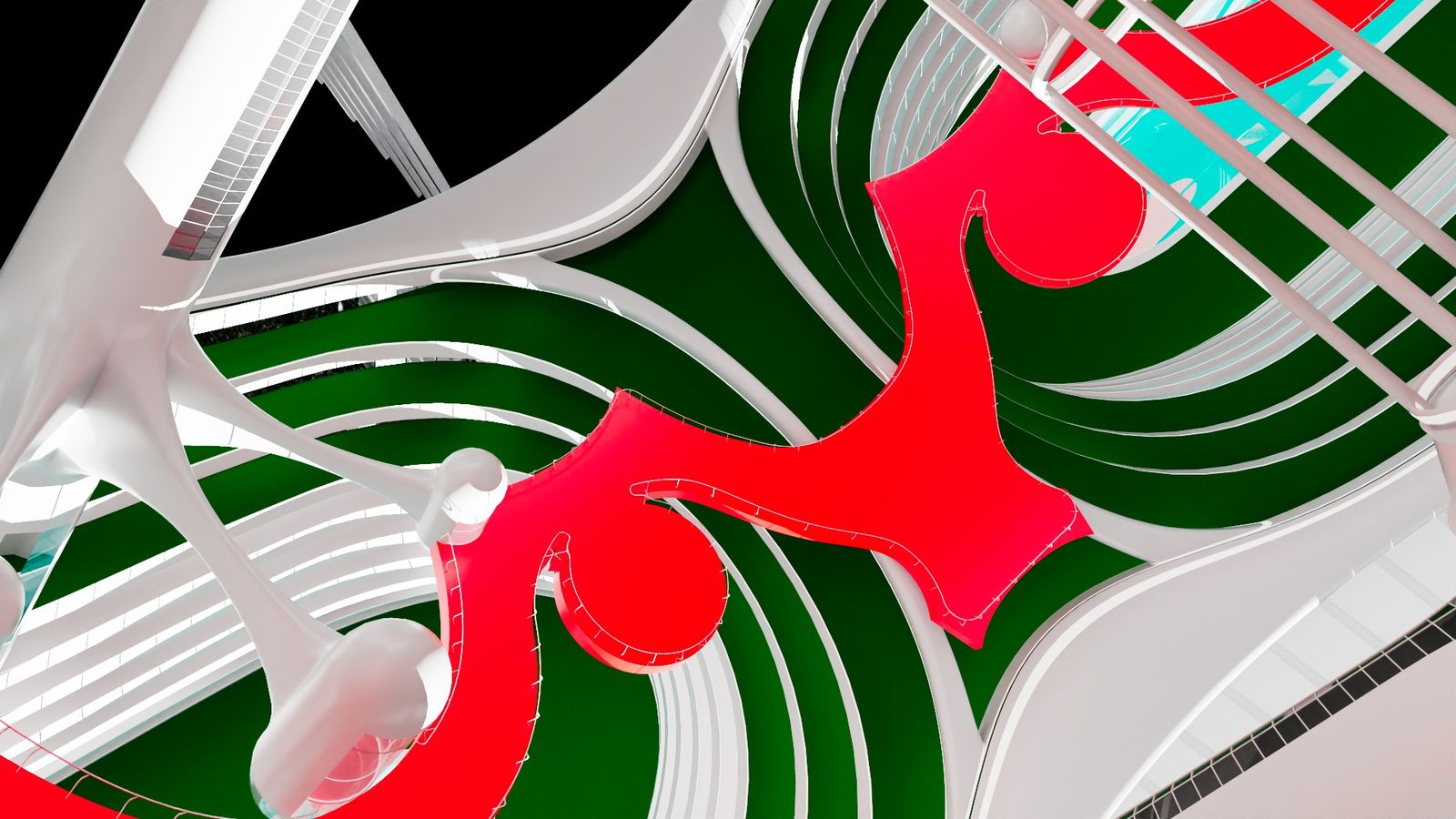
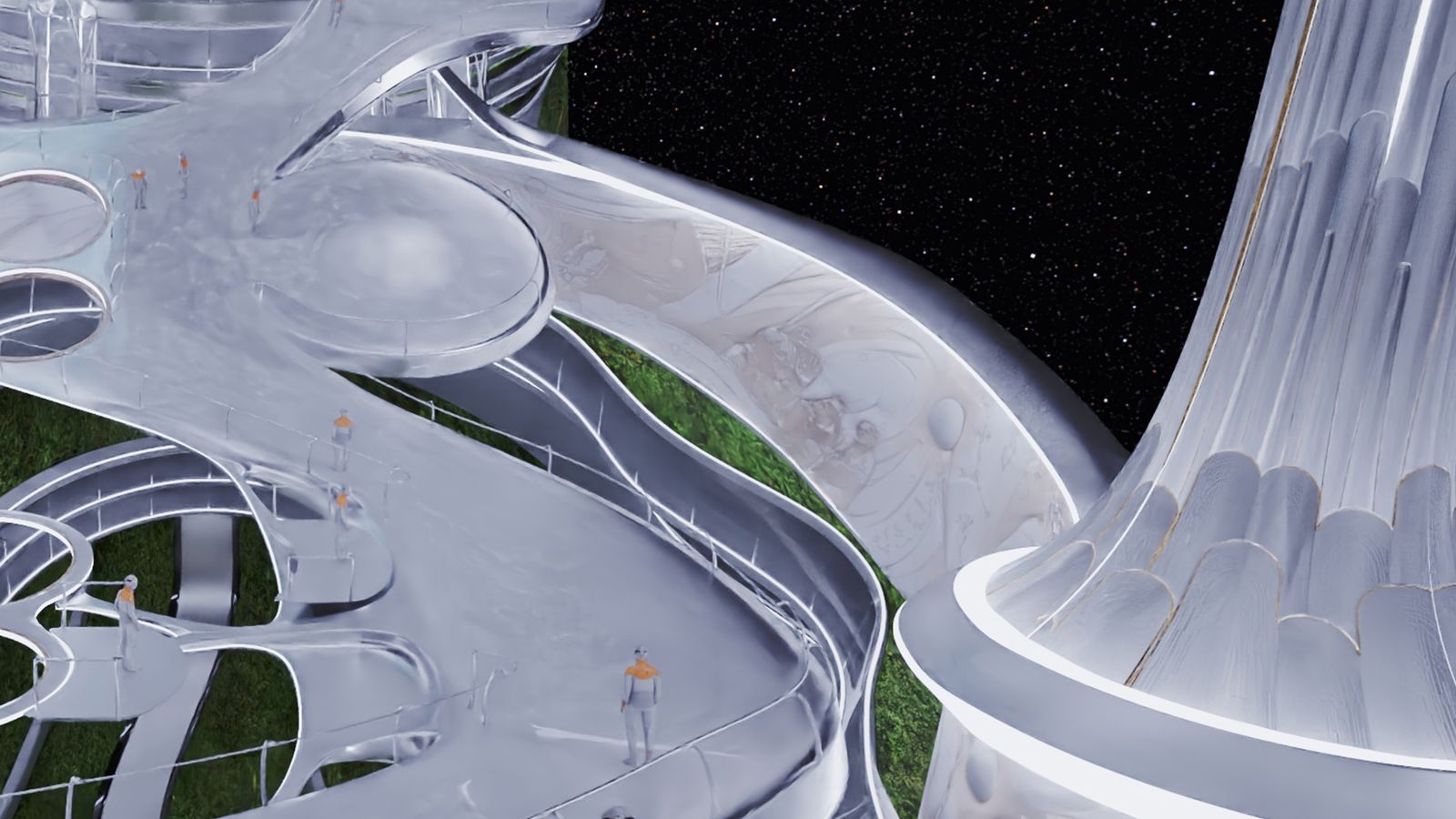
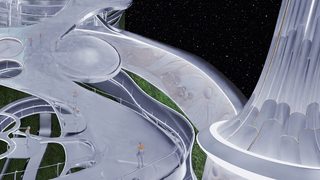
The spindle base — craft and reverence at the scale of the individual object
The Agora — the central public space of the Arc at full scale
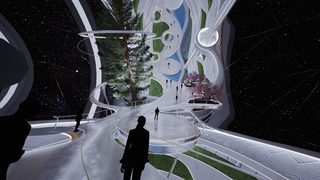
The sequoia — 164 years old, tended across the voyage
04 — The Result
Meaning at every scale — from individual object to entire world.

One of the most resonant ideas in the experience came from the founders, Paul Raphaël and Félix Lajeunesse: at the beginning of the voyage a sequoia sapling is planted, tended across 264 years of travel, and fully grown by the time you emerge from hypersleep. You went to sleep beside a sapling and woke beside a forest. The framework's job was to give that idea the visual and cultural weight it deserved — Axiom IV made visible.

The Amanogawa framework resolved both problems simultaneously. The track geometry became coherent — not because it was decorated, but because every surface and object within it belonged to a world with internal logic. The spindle space achieved the emotional weight the experience required.

The framework operated at every scale of our design process. A single material choice — the texture of a handrail, the wear on a surface — carried the same cultural logic as the overall environment. Individual objects had depth of symbolism that reinforced the world at the micro level.

The brief was solved. More importantly, the thing the brief was actually searching for was found.
The Narrative Surface — Frieze
A continuous history of humanity, rendered in bas relief around the interior wall.

The original interior design placed apartments and technical spaces at the level nearest the walking path — the zone most visible to participants as they moved through the experience. The brief hadn't flagged this as a problem. But within the logic of Amanogawa, it was.

Functional domestic space at eye level would have broken the reverence the framework required. The spindle was meant to feel like a civilisational monument — a place humanity had built across generations with profound collective intention. Apartments don't carry that weight.

The space needed something that earned its place in the Amanogawa world. Not habitation. History.

The proposal was to replace those spaces with a continuous stylised bas relief frieze — a visual timeline of the quintessential moments and figures from human history leading to the present, and beyond it into the imagined future.

Galileo. Newton. The Wright Brothers. The Apollo landings. The first Mars colony — not yet happened, but placed here as though it already had. The frieze held past, present, and imagined future in a single continuous surface, running around the interior wall of the spindle at the level where participants would naturally look.

The concept and art direction were developed as part of the Amanogawa framework. The final mural execution was carried out by another artist — whose realisation of the brief gave the frieze its sculptural quality and historical depth.

Bas relief frieze — Interstellar Arc
The bas relief frieze visible in the curved interior wall — a continuous narrative of human history from primordial origins to an imagined future. Execution: [artist credit to be confirmed]
The Narrative Surface — Pillars
The literal pillars of humanity's reach for the stars.

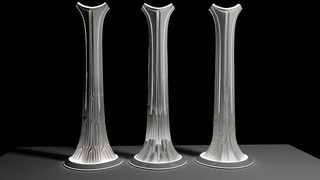
Six structural pillars — three pairs — ran through the experience. Rather than treating them as neutral background architecture, each pair was given a surface language that read as a stage in humanity's relationship with the stars.

Walking past them in sequence, a participant experiences the entire arc of human aspiration without a single word of explanation.

Pair I — Origins
The Tree
Abstract texture suggesting bark and branch — humans climbing to the tops of trees, gazing at the stars. The primordial moment the impulse began.
Pair II — Acceleration
The Golden Age
Patterns suggesting rocket plumes — the moment the reaching became technologically possible. Aspiration becoming achievement.
Pair III — Arrival
The Star Map
High-precision star map geometry — the technical mastery of navigating among the stars. The destination reached.
The three pillar surface languages — origins, acceleration, arrival
The Narrative Surface — Path
Gold filigree threading the story into the floor itself.

A visual language of gold filigree was developed for the walking path — each section carrying an abstract design that spoke to the content of its surrounding zone. The framework didn't stop at eye level. It extended beneath the participant's feet, threading the narrative of Amanogawa into every surface they could perceive: above, beside, and below.

Note: whether the filigree path was included in the final production is unconfirmed. The design was developed and delivered as part of the handover.

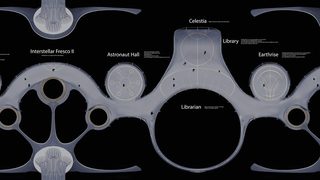
Complete zone layout — Voyage, Sequoia Tree, Arcadia, Astronaut Hall, Celestia, Library, Earthrise, Cosmopolis, First Contact, Vision
The Framework Extended
From interior to exterior — the shared language holds.

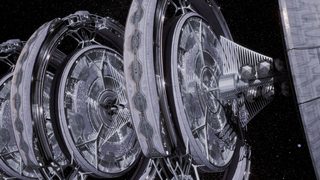
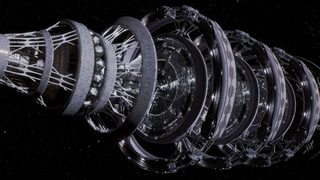
The Amanogawa framework extended beyond the interior experience to the exterior hull of the Arc — applied to base geometry created by another artist. The test of any genuine shared language is whether it travels independently. It did.

Exterior hull — Amanogawa applied to the delivery rings
Exterior hull — the framework at architectural scale
The Experience Today
Interstellar Arc is currently open at Area 15, Las Vegas.
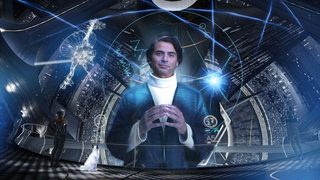
The holographic Carl Sagan — official press material, interstellararc.com

Interstellar Arc is currently running as a permanent installation at Area 15 Las Vegas, created by Felix & Paul Studios. The experience includes a holographic recreation of Carl Sagan — a centrepiece of the journey through humanity's relationship with the stars.

Press image courtesy interstellararc.com — not created by Hungry Ghost

Visit interstellararc.com →
Recognition

Winner — AWE Best Location Based Entertainment Award 2026

AWE Best Location Based Entertainment Award 2026
All images
Previous Project
Fine Art Practice
Next Project
Runaways — Cosmic Happy Meal