Making the hardest part of an unmade film feel immediately real
At the earliest stage of a film, images must do work that language cannot. A director needs to convince financiers, actors, and distributors to commit to something that doesn't exist yet — and the hardest part is always the thing that's hardest to describe.
Pitch art isn't illustration. It's an argument. Each image is a claim: this world is real, this threat is felt, this story is worth making. The brief is always some version of the same challenge — take the thing that's most difficult to communicate and make it immediately, viscerally understood.
That requires reading the project before the project reads itself. Analysis of themes, symbols, tonal register, intended audience. Then a decision about what single visual answer will unlock the most belief in the fewest frames.
The work on this page spans five projects — one collaboration with Terry Gilliam, one creature design brief for a produced sci-fi film, one unproduced pre-production project, and a selection of pitch work that never made it to screen.
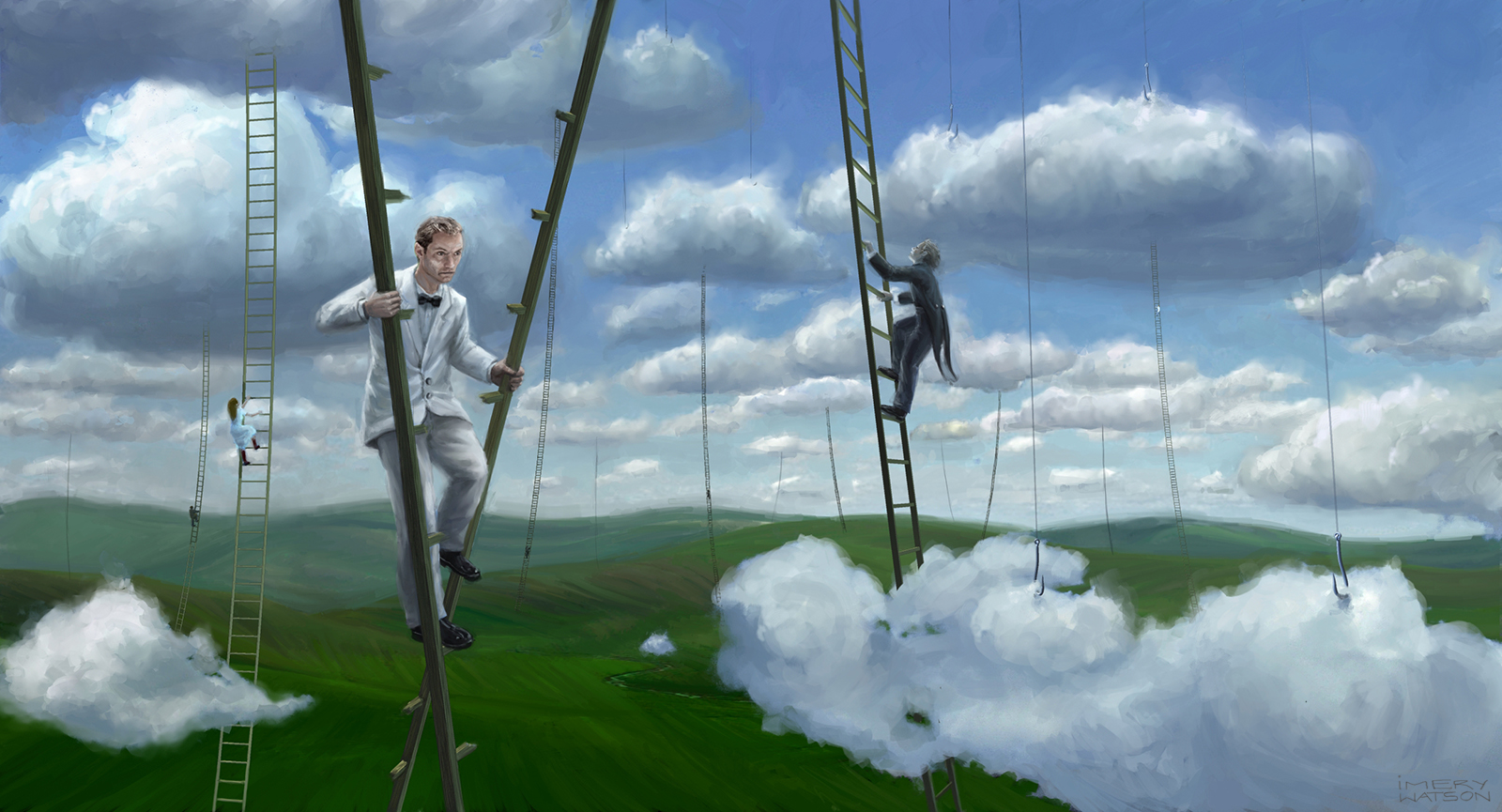
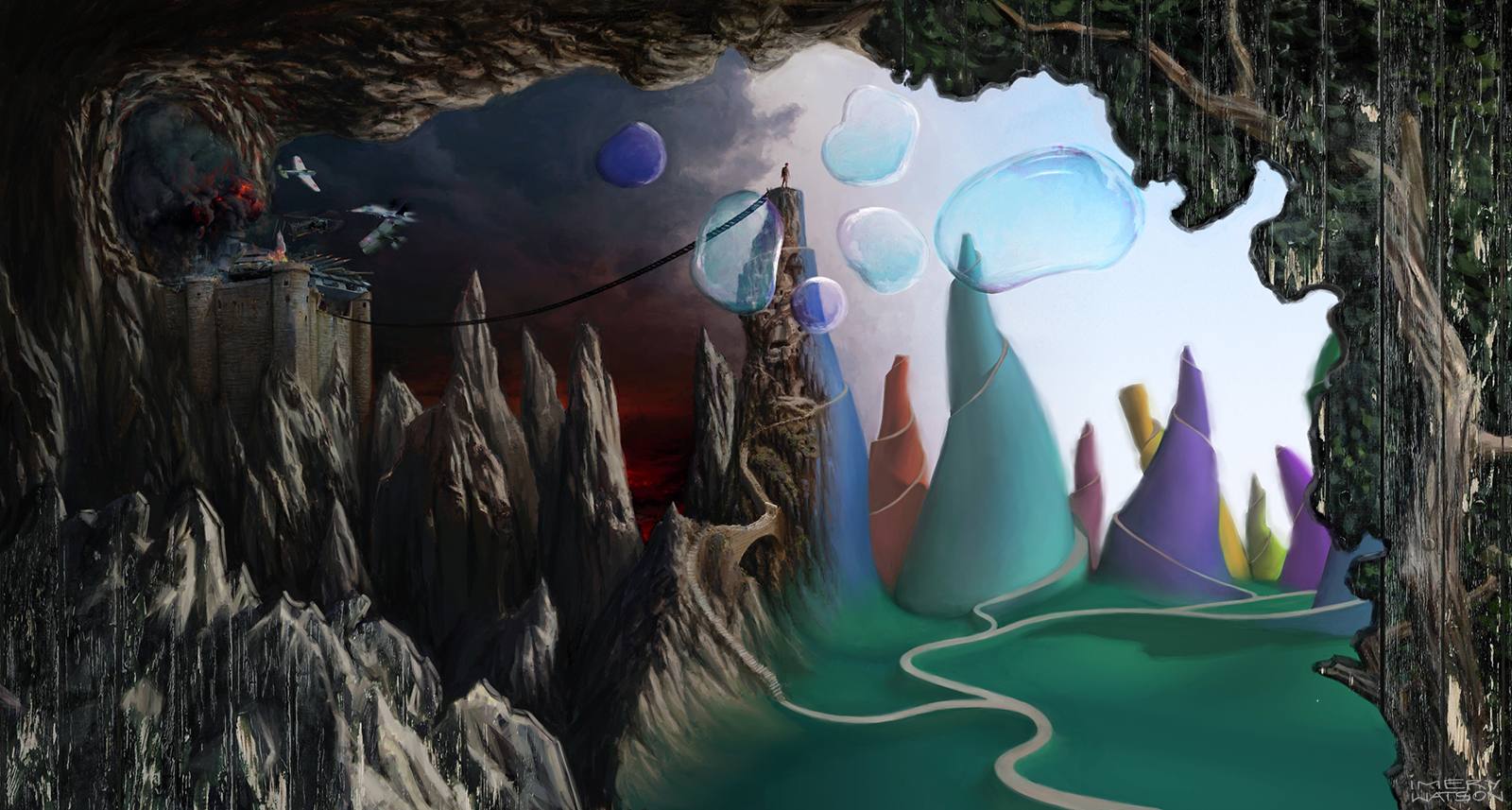
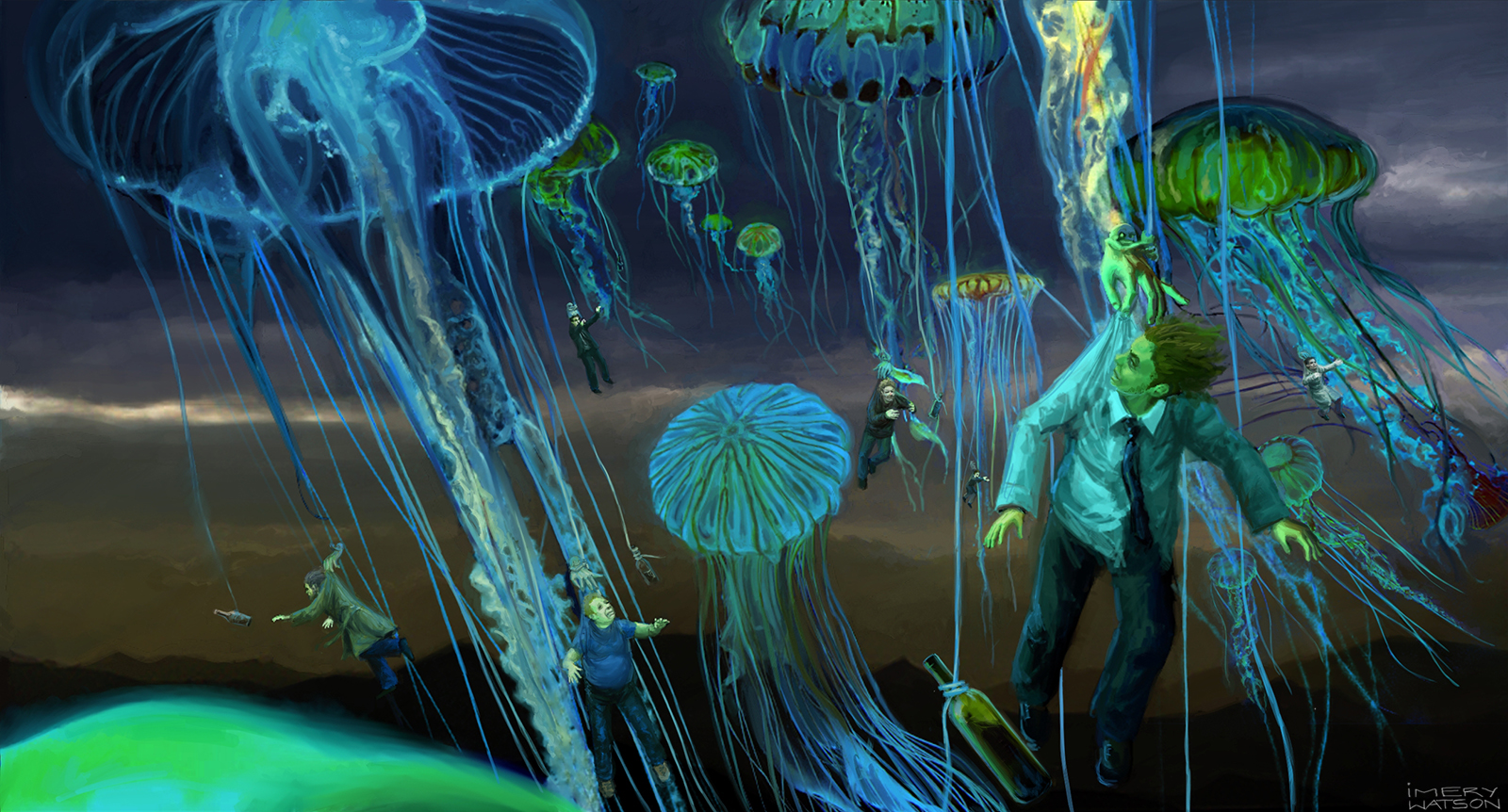
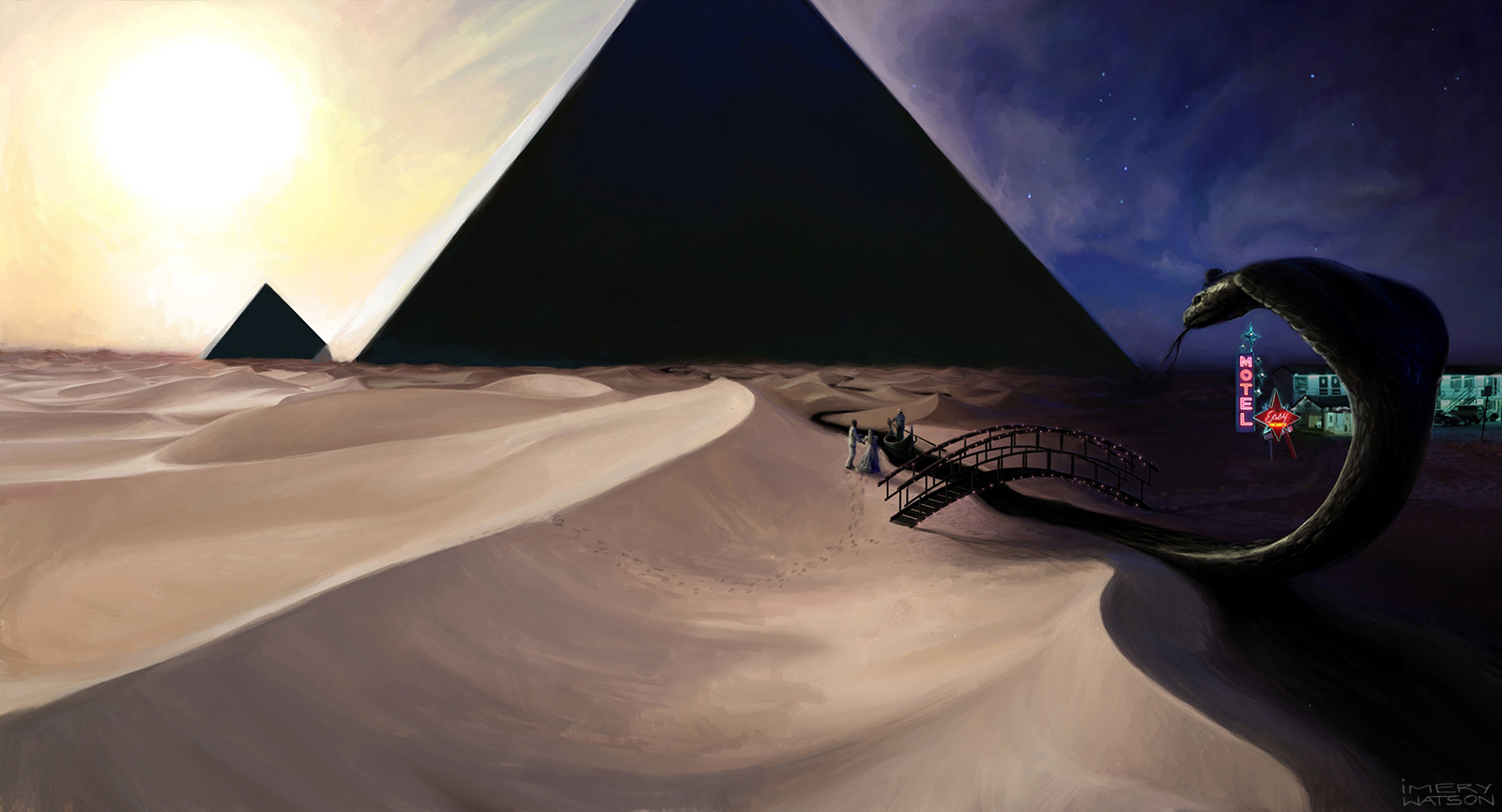
Parnassus's central problem is visual: how do you show a world that is different for every person who enters it? The Mirror World isn't a fixed place — it's the projection of whoever steps through. That makes it almost impossible to establish as a single coherent image.
The brief from Gilliam was to build images that felt simultaneously magical and dangerous, familiar and completely alien. The pitch book needed to sell not just the world but the experience of stepping into it — that vertigo of the threshold.
The compositional approach: show the split. Every image in the Parnassus work holds two worlds in tension — the degraded real and the impossible imaginary. The tightrope walker standing between war and colour. The doctor peeling reality back like a curtain. The hierarchies of aspiration rendered as endless ladders in a pastoral sky.
The paintings are deliberately heterogeneous in tone — that inconsistency is the point. Gilliam's imagination doesn't have a single register.
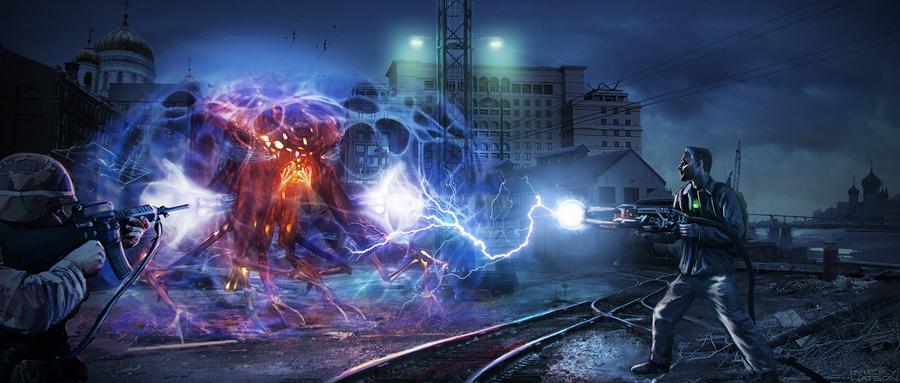
The Darkest Hour's premise — alien invaders that move as electromagnetic entities — poses an acute design problem. Mostly invisible, yes, but not always. The film's central weapon, a lightning gun, disrupts the cloaking on contact. The moment of discharge reveals the creature in full. Which meant the design had to hold up as a visible alien, not just as an energy effect.
The brief: design something strange enough that its partial invisibility reads as an evolutionary advantage rather than a narrative convenience. The creature needed to be genuinely alien in its own right — the cloaking is how it hunts, not what makes it threatening.
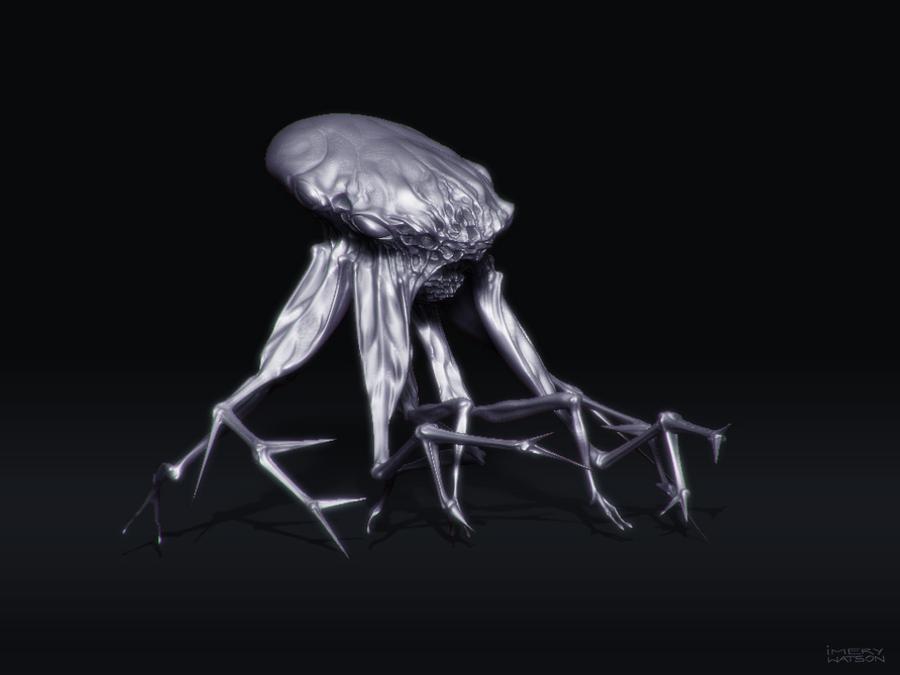
The solution draws from deep-sea biology: organisms that evolved in total darkness, whose structure is determined entirely by function. The flatfish/ray body plan with arachnid legs. Latticed internal structure visible through a semi-translucent carapace. A central core that discharges the electrical energy it has absorbed from infrastructure and electronics — which is also what the lightning gun destabilises.
The three-stage development — ZBrush sculpture, design painting, action concept — shows the full arc from biological logic to the revealed creature mid-combat in a Moscow rail yard.
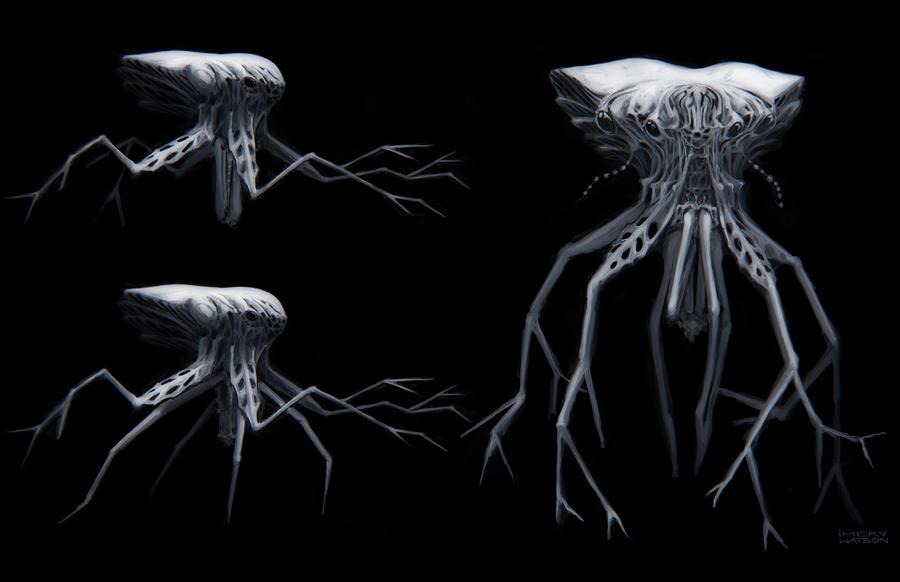
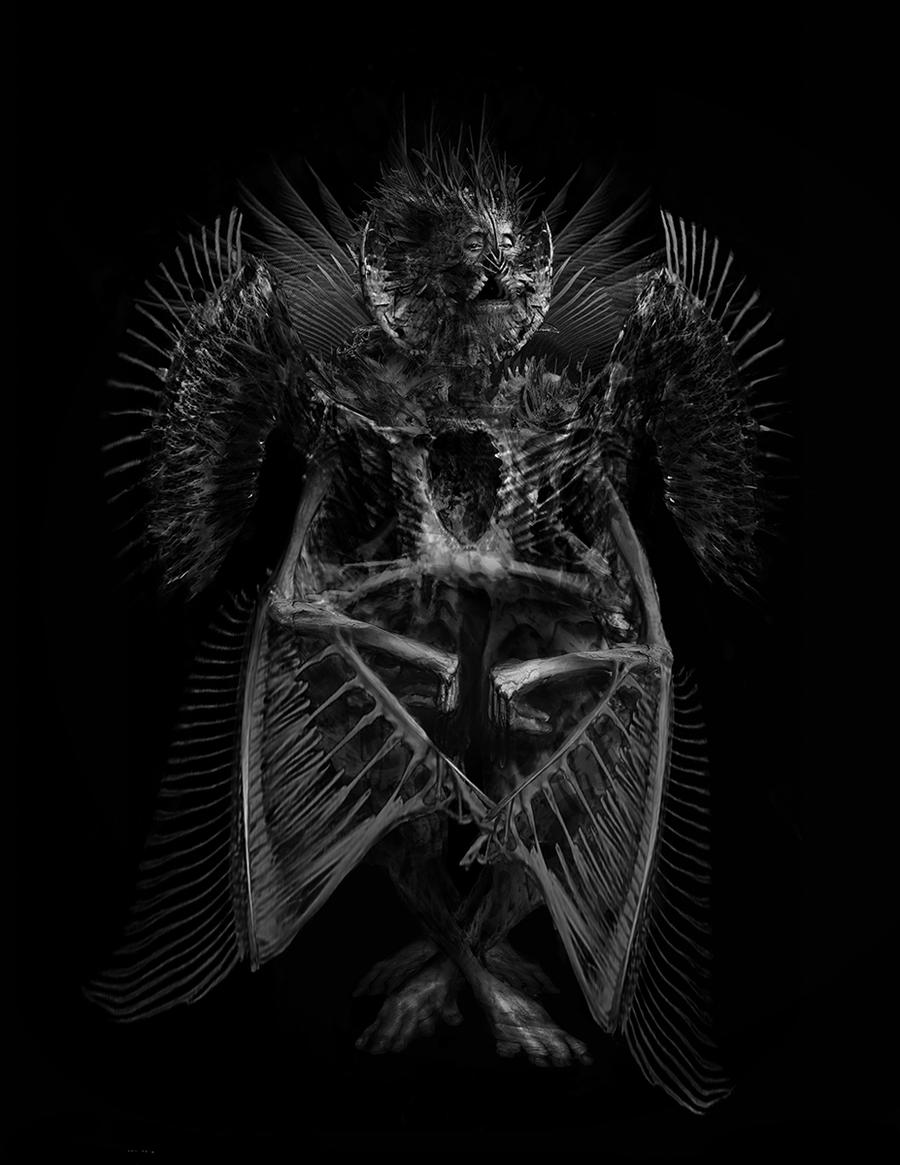
Lazarus began with a cultural archaeology problem. Shamans and witch doctors across unconnected traditions have produced strikingly similar ceremonial regalia: bilateral headdresses with radiating feather structures, mask faces embedded in torso-level chest pieces, insectoid limb geometry encoded in ritual costume. The question the project asked: what if they weren't inventing? What if they were remembering?
The brief was to reverse-engineer the creatures that might have been the original inspiration — to work backwards from the human record to the actual source. Malevolent dimensional entities that had crossed through, been glimpsed, and been encoded in human ritual memory without the witnesses understanding what they were looking at.
The Princeling design uses a natural history plate approach — bilateral symmetry, black background, clinical presentation — because that wrongness reads most clearly against a neutral field. The horror isn't grotesquerie. It's recognition: the headdress proportions, the feather-spine radial structure, the face-in-thorax configuration. The shamans were accurate. They just didn't know what they were drawing from.
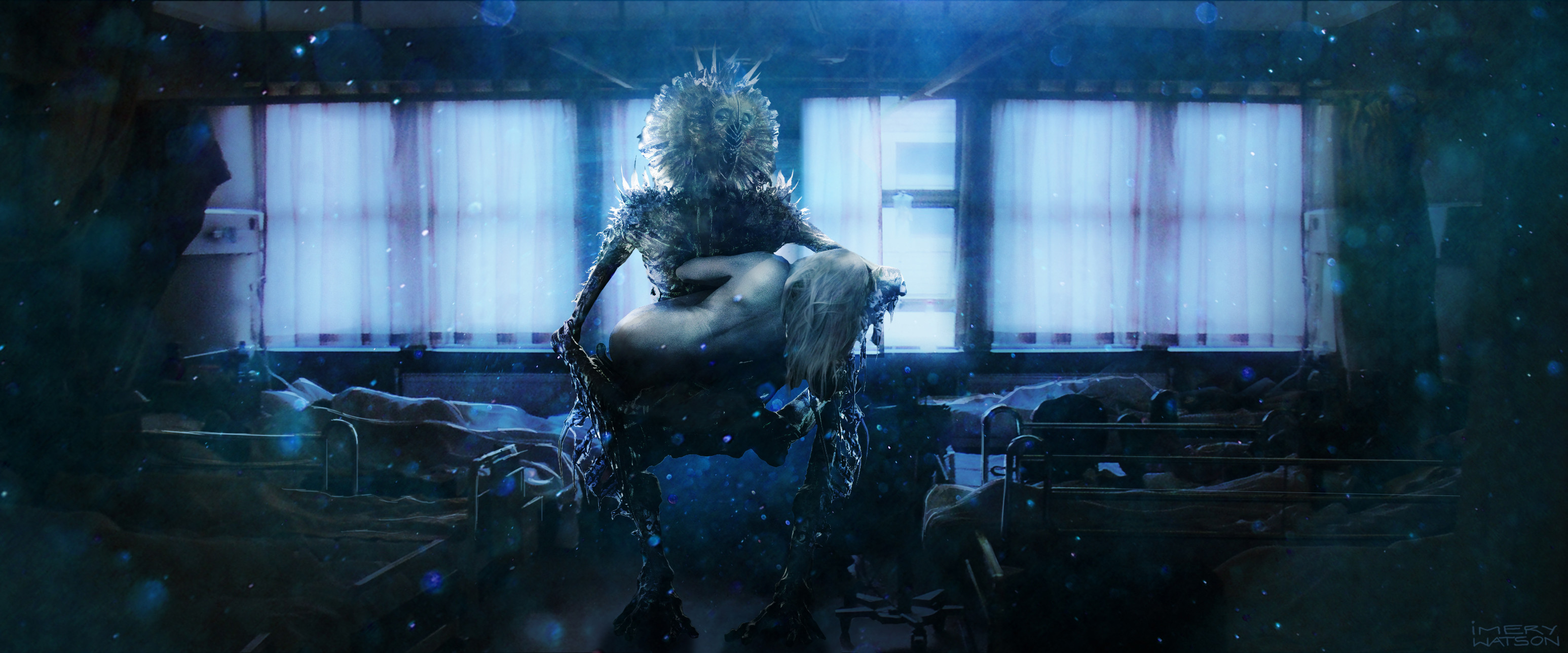
The hospital environment shifts the scale and context. The creature in an institutional space, holding a human figure backlit by ward windows — the dimensionality of the threat made visceral and contemporary.
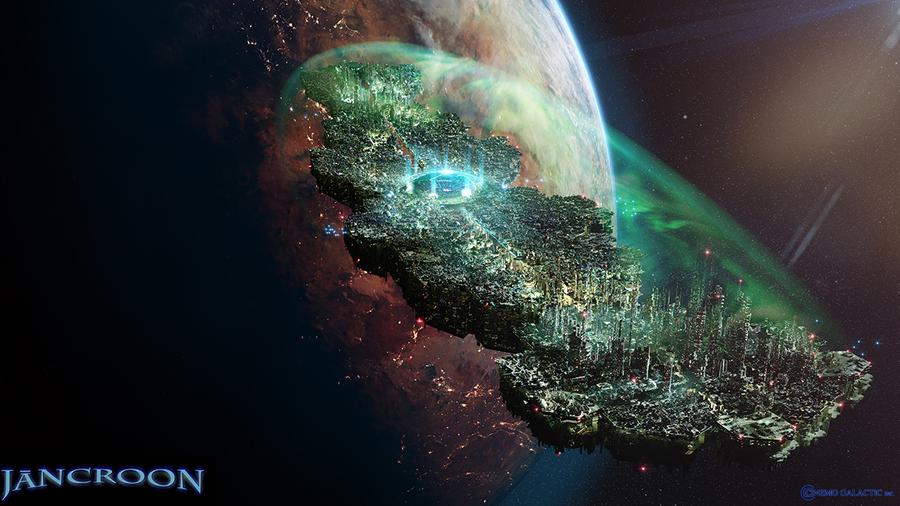
Jancroon was a pitch document image for an original sci-fi property. The brief was to establish the scale and character of a massive orbital station — effectively an asteroid that has been colonised so completely it no longer resembles one.
The image needed to communicate several things simultaneously: enormous scale, long habitation, functional complexity, and enough visual distinctiveness to make the world feel unlike anything existing. The approach was to treat the station as geological — layers of settlement accumulated over centuries, the original asteroid form barely visible beneath.
The planetary atmosphere, the nebula light, and the single point of intense blue illumination at the station's centre give the image its mood — ancient, inhabited, powerful, isolated. Pitch art for a property is also a tone argument, not just a world-building exercise.
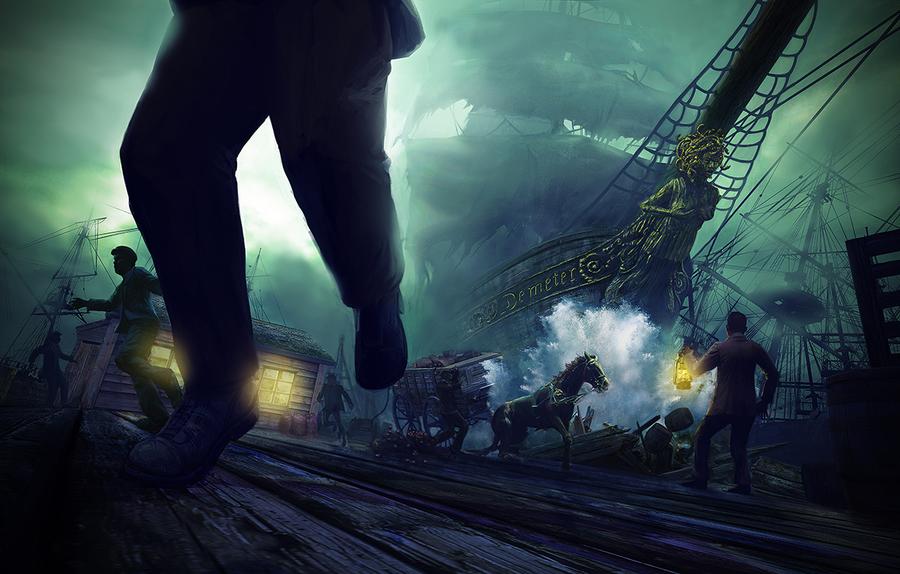
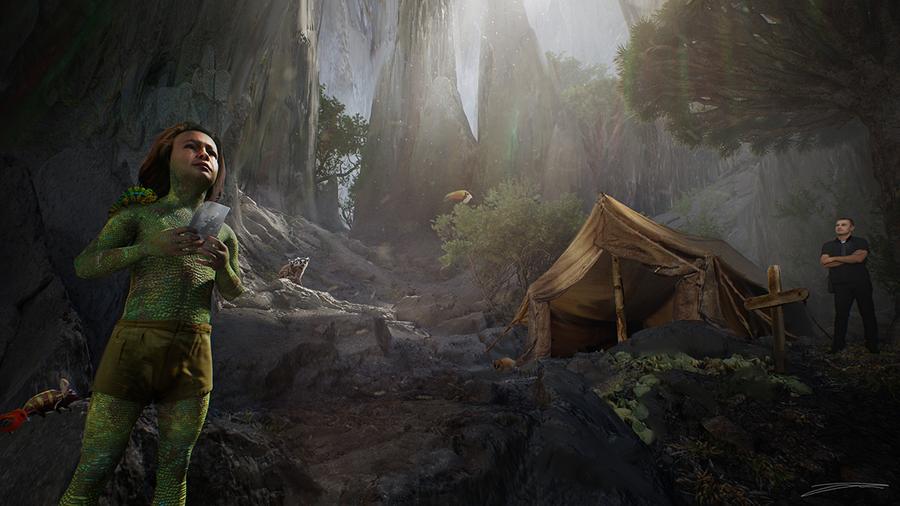
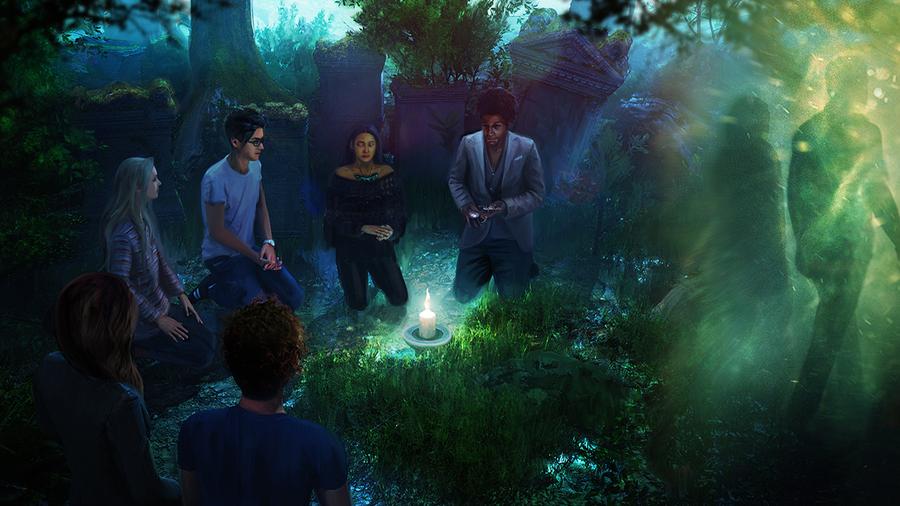
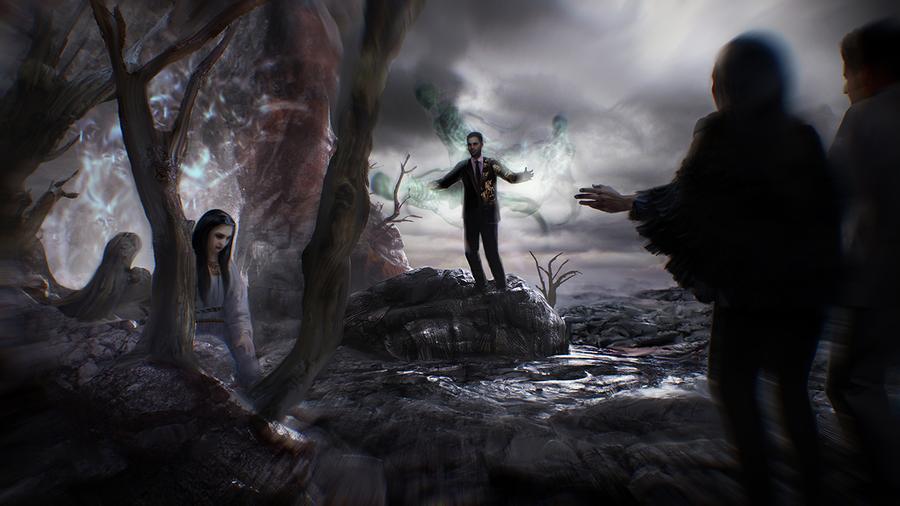
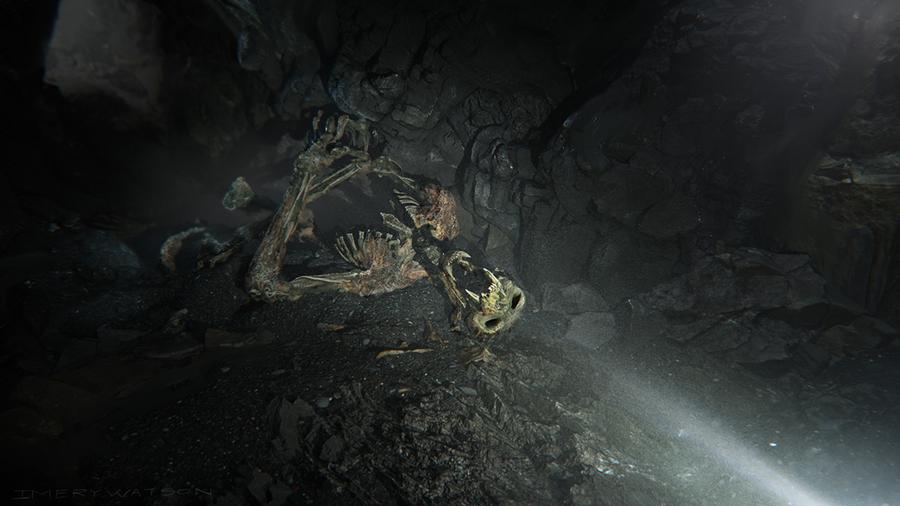
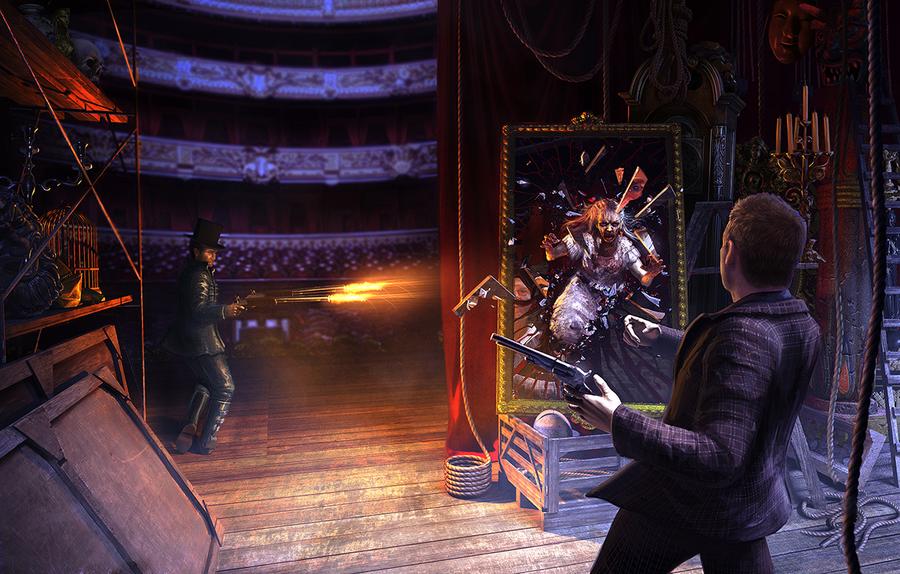
Not all pitch work becomes a film. The majority of early-stage visual development is for projects that stall, pivot, or simply don't find their moment. The images below represent a selection of that work — unnamed projects, real briefs, creative problems worth showing regardless of outcome.
Each one demonstrates a different application of the core principle: identify the impossible thing, then find the compositional or tonal move that makes it real. The Last Voyage of the Demeter. An aerial attack on a hillside monastery. A contemporary supernatural thriller. A first-contact sci-fi in Madagascar's Tsingy.